
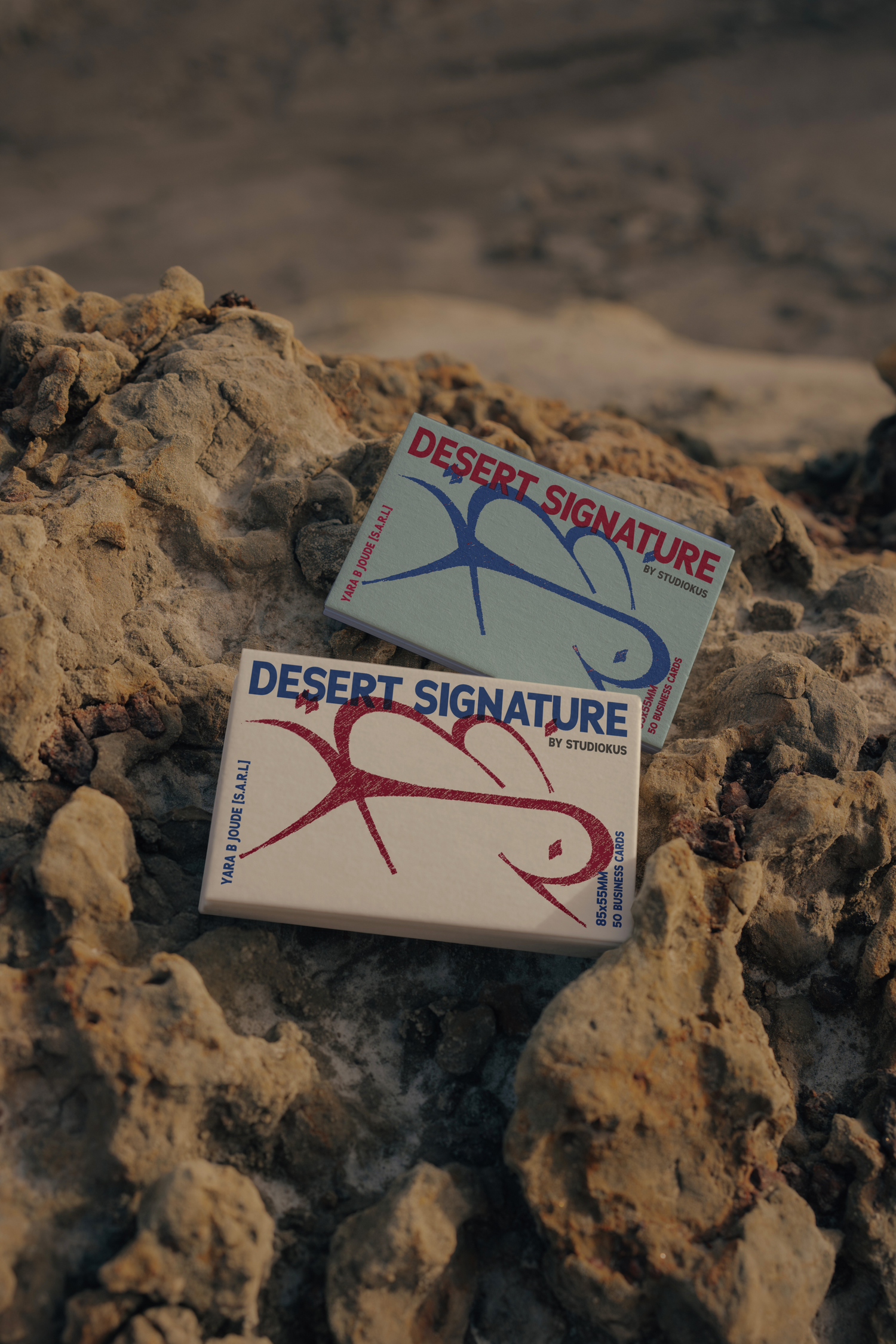
YBJ-0821 · Case study 02 / 06Dakhla, Morocco · 23°41′N 15°57′W
Yara B Joude (S.A.R.L) is a Moroccan hospitality and tourism company founded by Malika Bouchama and Mustapha Bazzoun. At the heart of its activity is “Chez LAJWAD”, an eco-tourism accommodation in the Dakhla region, at the edge of the Sahara: twelve Berber tents, an ecolodge built from local materials, a Saharawi kitchen and méharées into the desert. An invitation to listen to the silence that Bedouin culture has inhabited for millennia.
- Year
- 2021
- Client
- Yara B Joude (S.A.R.L)
- Role
- Creative Direction, Research, Brand Identity
- Type
- Commissioned
“The desert is beautiful, it does not lie, it is clean. That is why it must be approached with respect.”
« [Le désert] est beau, ne ment pas, il est propre. C’est pourquoi il faut l’aborder avec respect. »
Théodore Monod
The desert.
The brief was simple: design a logo for Yara B Joude (S.A.R.L), a Moroccan company founded in Dakhla. The research, however, demanded something deeper: to understand the territory, its culture, the philosophy of a project that places the desert at the heart of its identity. The Dakhla region, on the southern edge of the Kingdom, is not a backdrop among others: it is a threshold. Between the Atlantic and the Sahara, between the urban and silence, between Saharan tradition and a modernity still to be invented.
The invitation extended by “Chez LAJWAD”, the eco-tourism accommodation at the heart of the project, is not that of a hotel. It is that of a posture. The naturalist Théodore Monod spent his life crossing the Sahara, and his call to approach the desert with respect guided the project. The logo had to carry the same rigour: clean, without excess ornament, elemental in its structure. But it also had to bear witness to the beauty that sometimes emerges from austerity itself. A flower in the stone. A geometry in the sand.
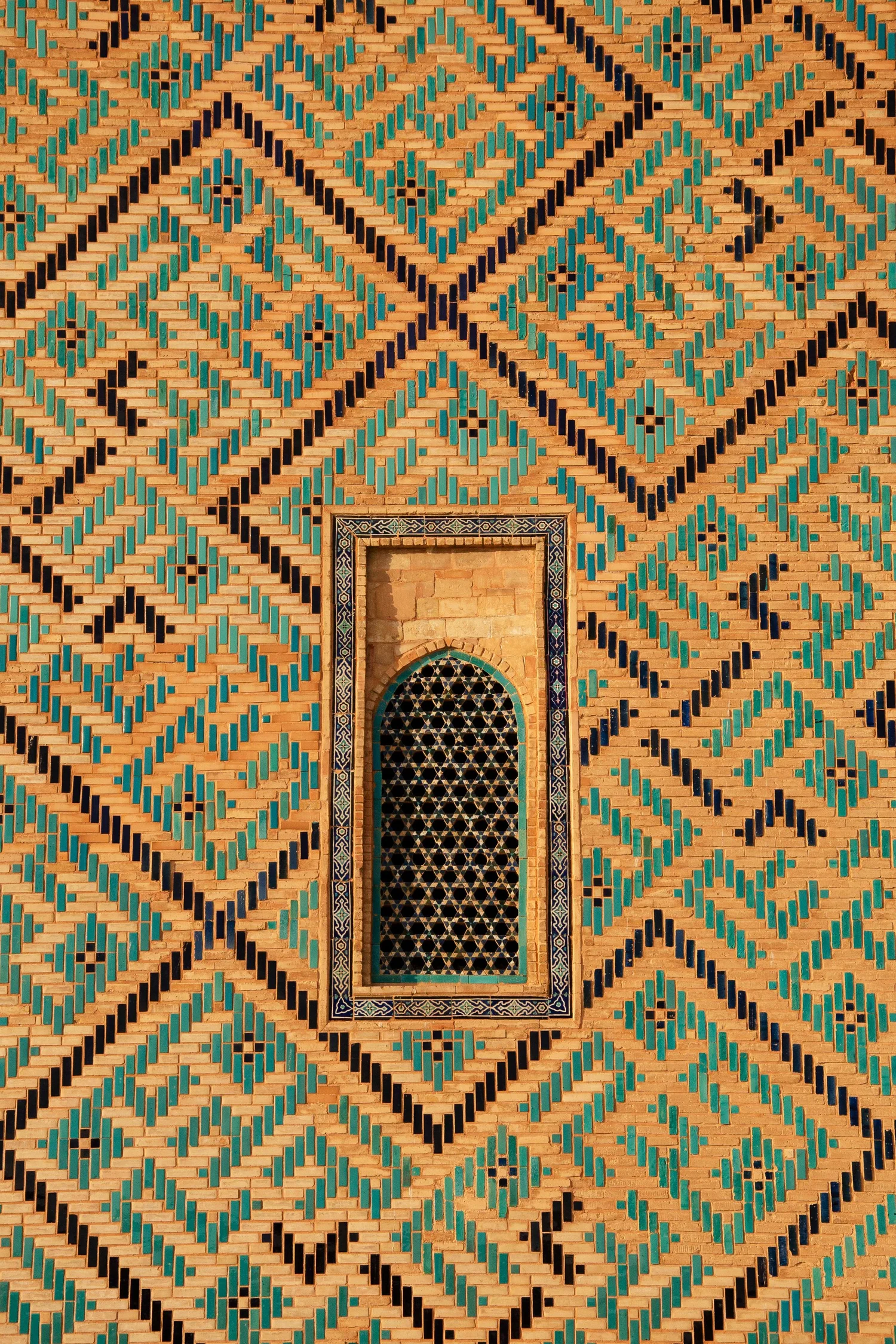
Moroccan architectureFor the geometry
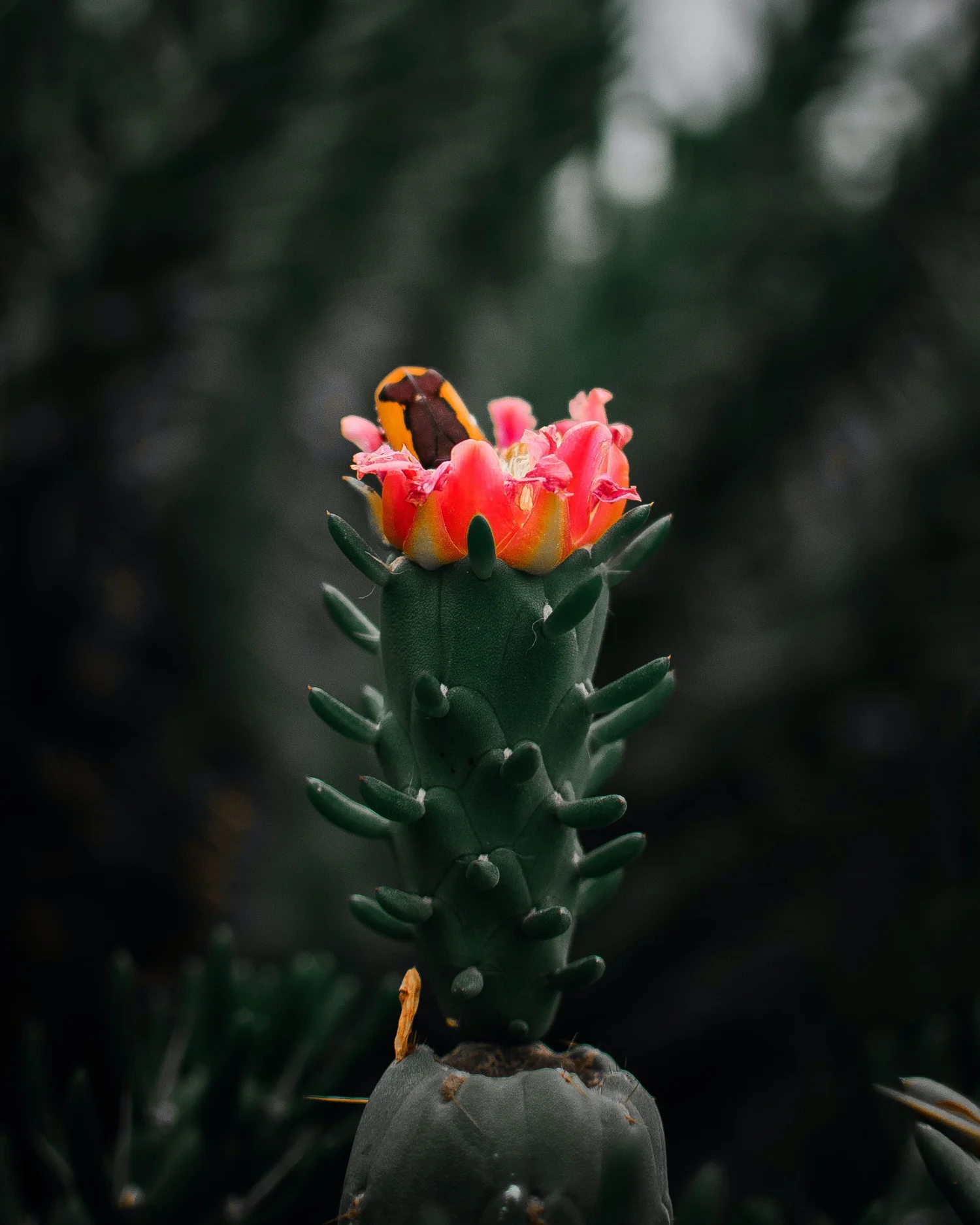
Eve’s needle cactusFor the flower
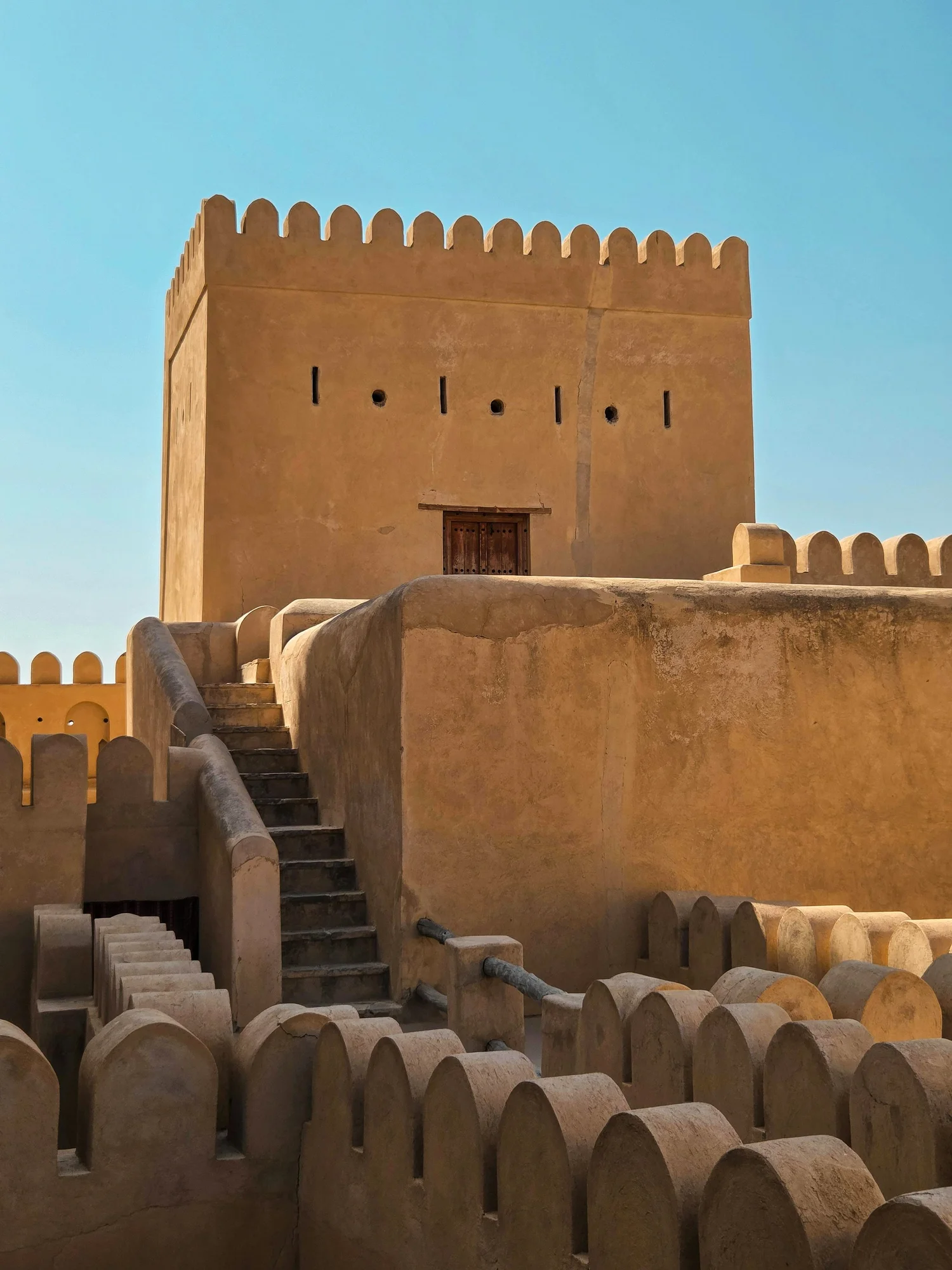
DakhlaFor the palette
The flower.
The central motif of the identity was borrowed from a single plant: the Austrocylindropuntia subulata, better known as “Eve’s needle cactus”. Native to the high Andean plateaus, it has colonised Morocco with remarkable discretion. It grows where nothing else grows. Its tips bear an almost incongruous red flower, intense against the rigour of the landscape that surrounds it. This double nature, austerity of structure and intensity of detail, embodies precisely what Chez LAJWAD seeks to offer: the asceticism of the desert meeting the generosity of a bloom.
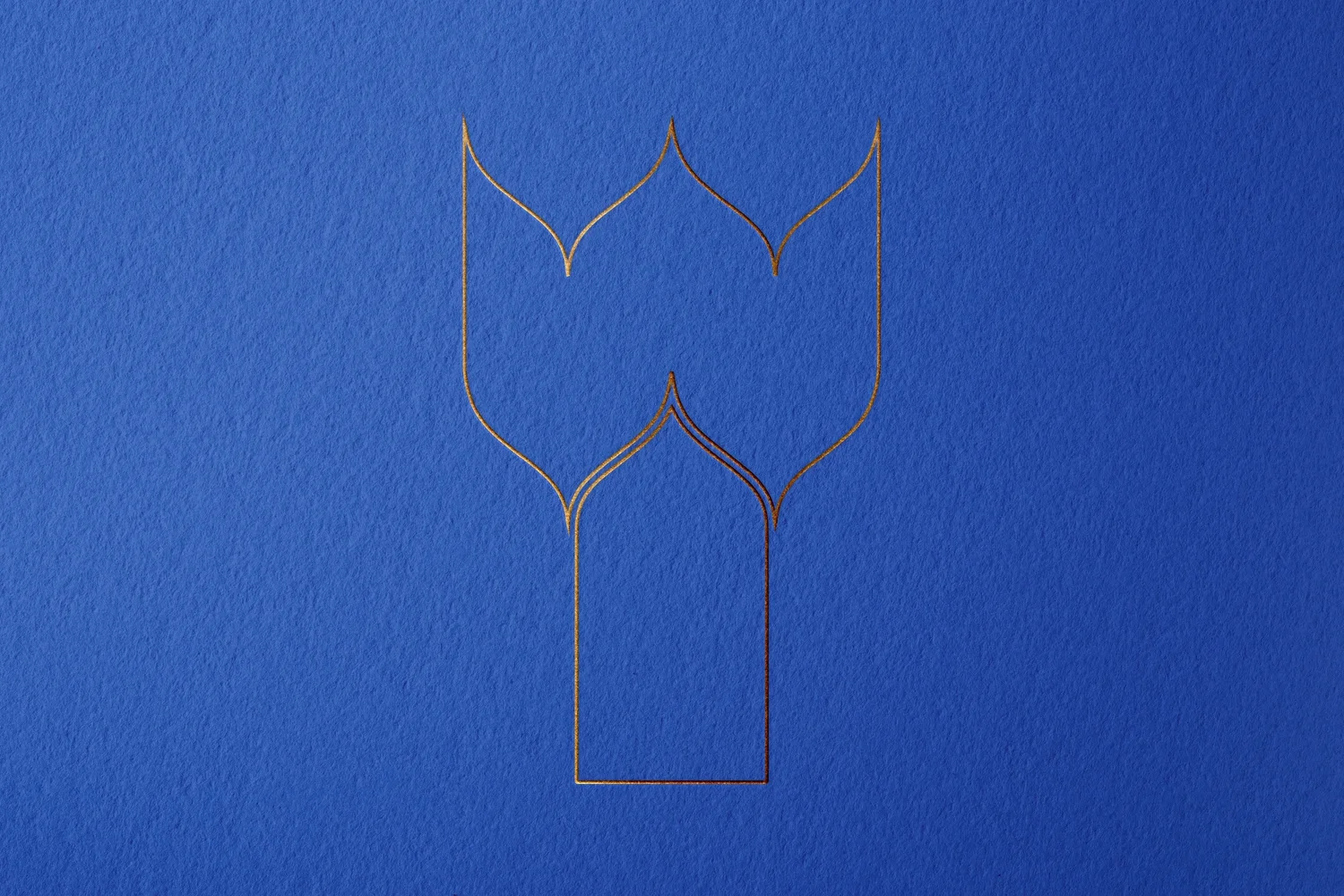
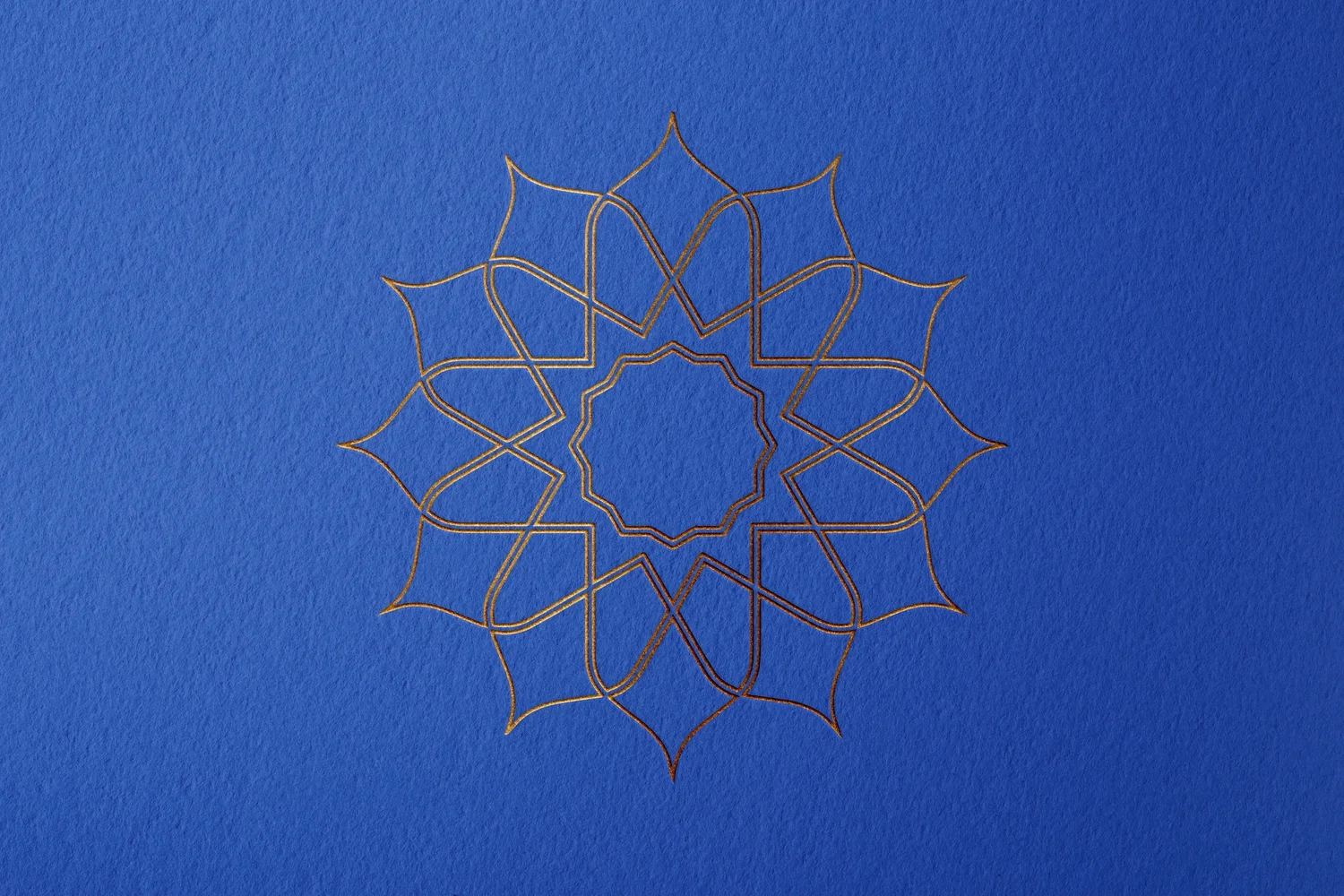
The geometric exploration then draws on the vocabulary of Moroccan and Islamic architecture: repetition, symmetry, the weaving of lines that interlock into a single motif. The zellige tiles of the medinas, the muqarnas of the palaces, the arabesques of the moucharabiehs: ornamental systems that share a single rule. Beauty is born of constraint. Every line implies another. Every void is held by a presence. The logo, in the end, is neither a plant nor an architectural motif. It is what the two say together: the patience of a flower and the rigour of a calculation.
The explorations.
Three geometric explorations: each construction above, the form it resolved into below.
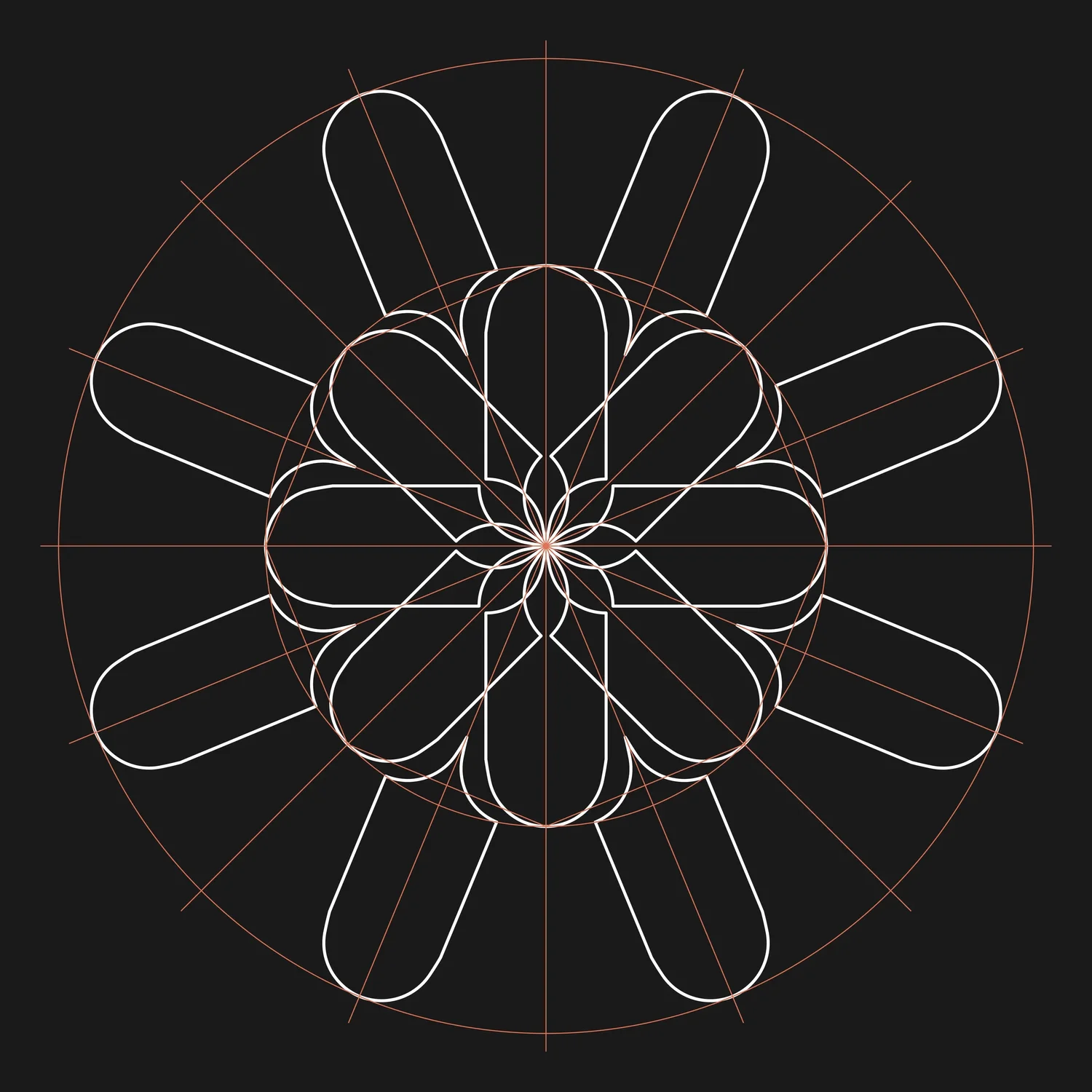
01 · Arabesque
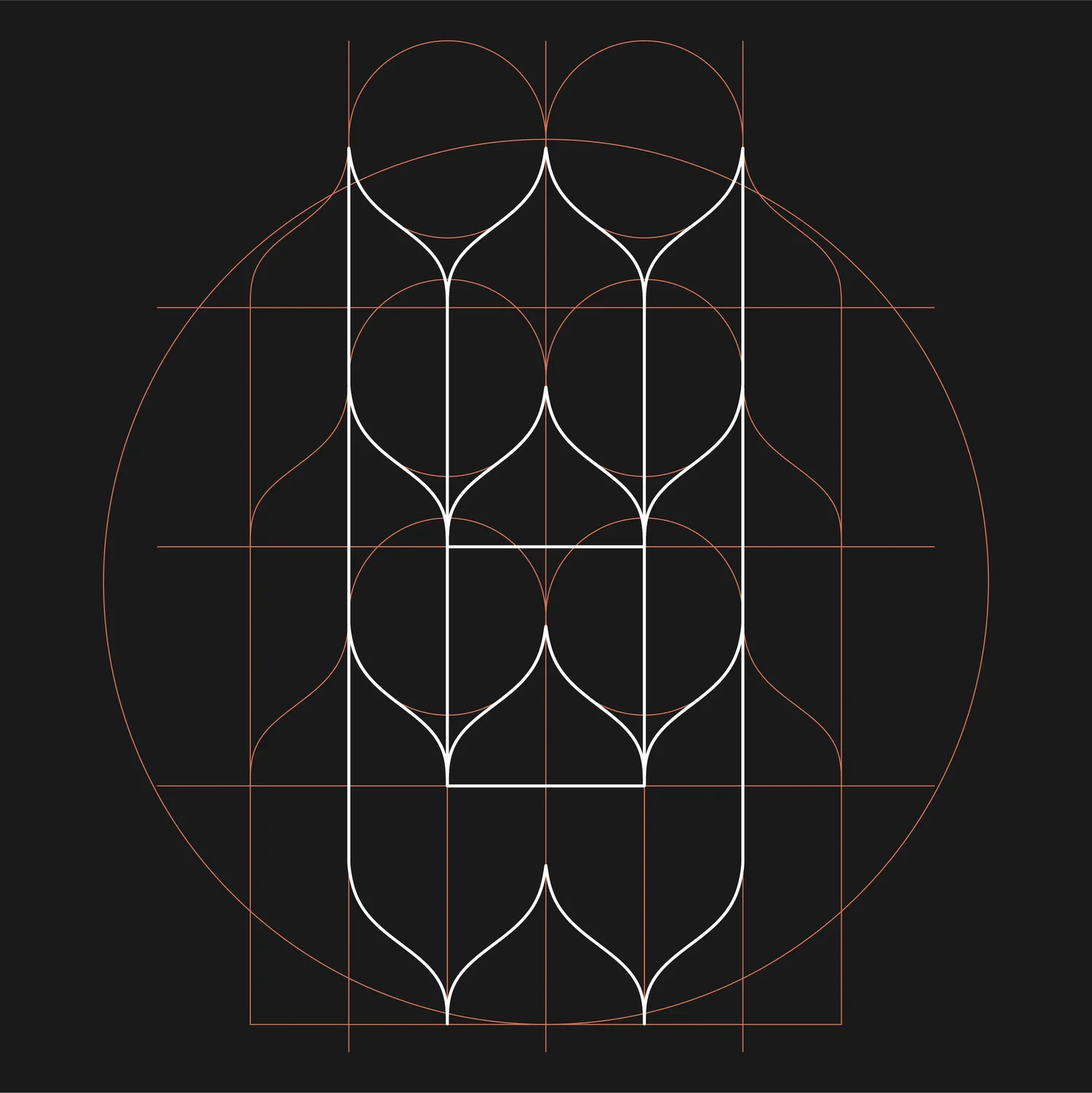
02 · Moucharabieh
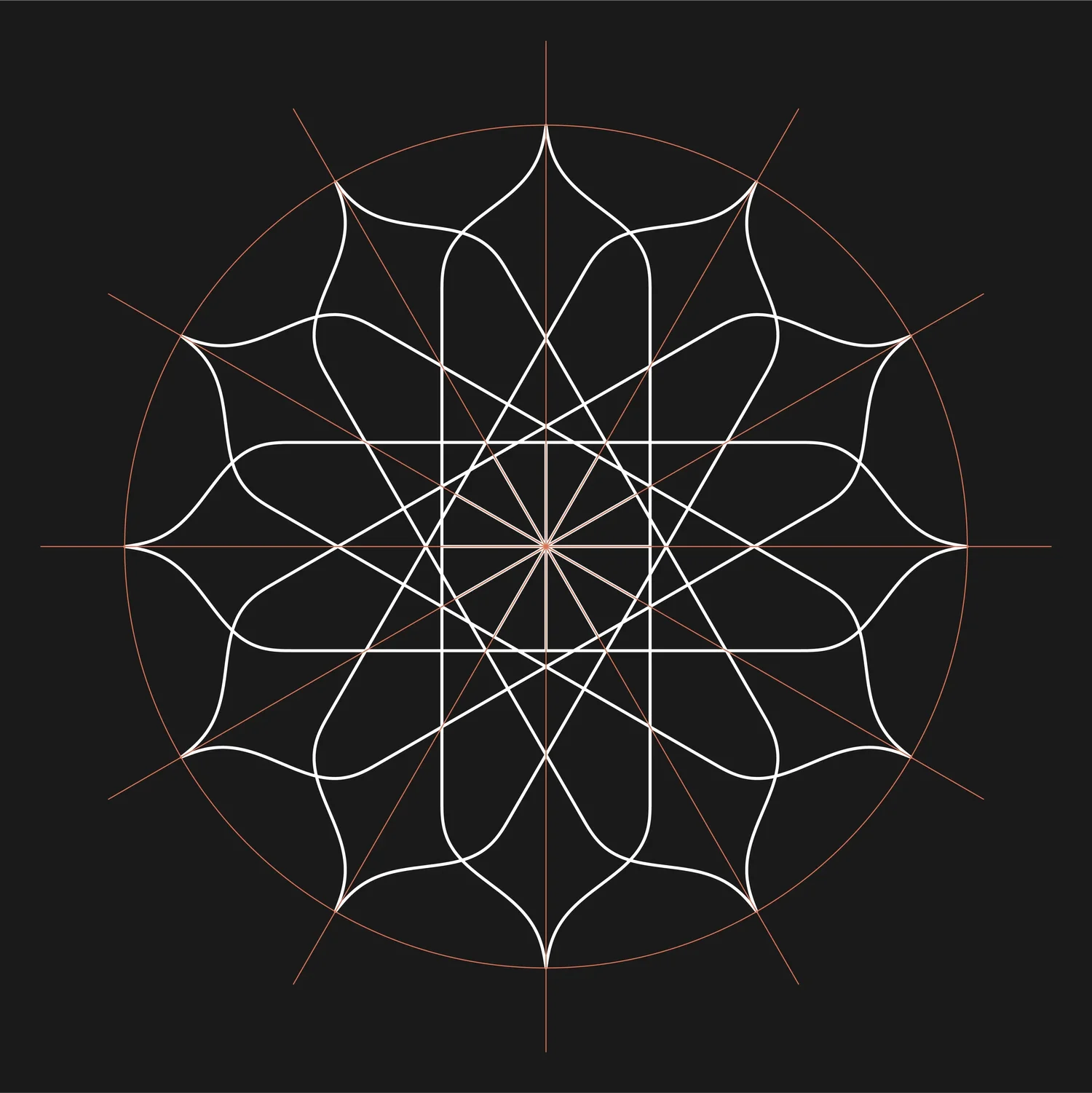
03 · Muqarnas
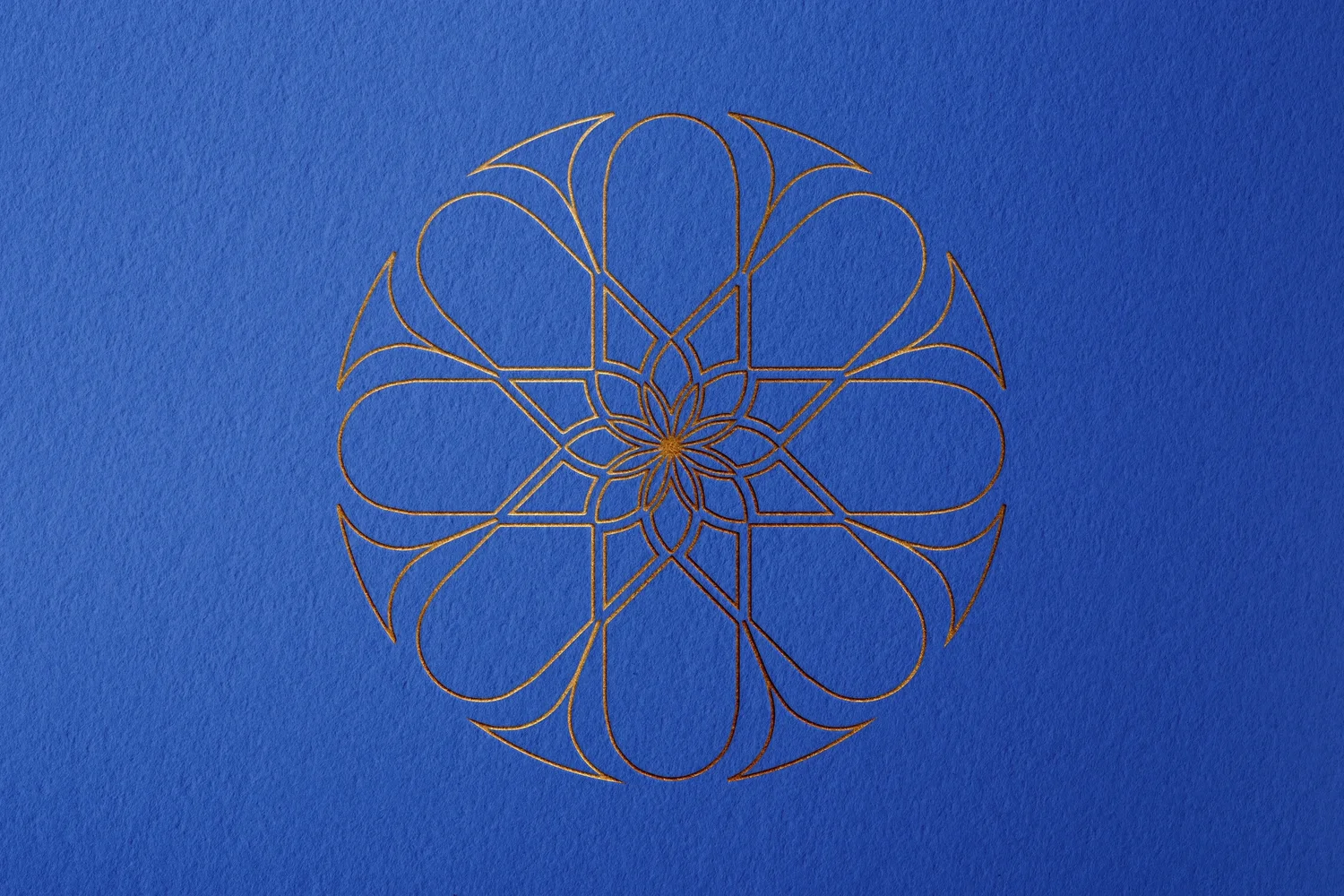

The signature.
A monogram in a Maghrebi calligraphic register.
The three initials, Y, B and J, compose into a single stroke, somewhere between a Western monogram and an Ottoman tughra, the calligraphic signature in which letters interlock into a single shape. The gesture does not imitate Arabic script: it borrows its grammar. The contrast of thick and thin strokes, the continuous trace of a reed pen, the diamond-shaped diacritics: all drawn from the Maghrebi calligraphic tradition, without a single Arabic letter on the page.
Three Latin letters, then, drawn in the language of another script. The Y carries the opening gesture, the B nests at the centre, the J extends its descender like the tail of a ج or a ر. The result is neither a word nor a conventional acronym: it is a visual signature, a single stroke that condenses the identity of Yara B Joude into the discipline of a calligraphic gesture. What the flower could not be, the line became: a meeting of two graphic worlds, with neither effacing the other.
The typefaceAdrianna Condensed Light
- Uppercase
- Lowercase
- Figures
- Display
- Text
The paletteEight colours, four pairs
- 01 Henné × Sable 01A#A6211FRGB 166 · 33 · 31CMYK 4 · 95 · 85 · 3401B#DCC09ERGB 220 · 192 · 158CMYK 16 · 26 · 41 · 1
- 02 Argile × Tuareg 02A#D8575FRGB 216 · 87 · 95CMYK 0 · 76 · 48 · 1202B#345477RGB 52 · 84 · 119CMYK 79 · 50 · 18 · 38
- 03 Atlantique × Brume 03A#1C419ARGB 28 · 65 · 154CMYK 97 · 80 · 0 · 203B#9DBDC8RGB 157 · 189 · 200CMYK 44 · 16 · 19 · 1
- 04 Oasis × Terre 04A#307F70RGB 48 · 127 · 112CMYK 76 · 20 · 53 · 2504B#DD7154RGB 221 · 113 · 84CMYK 4 · 64 · 65 · 7
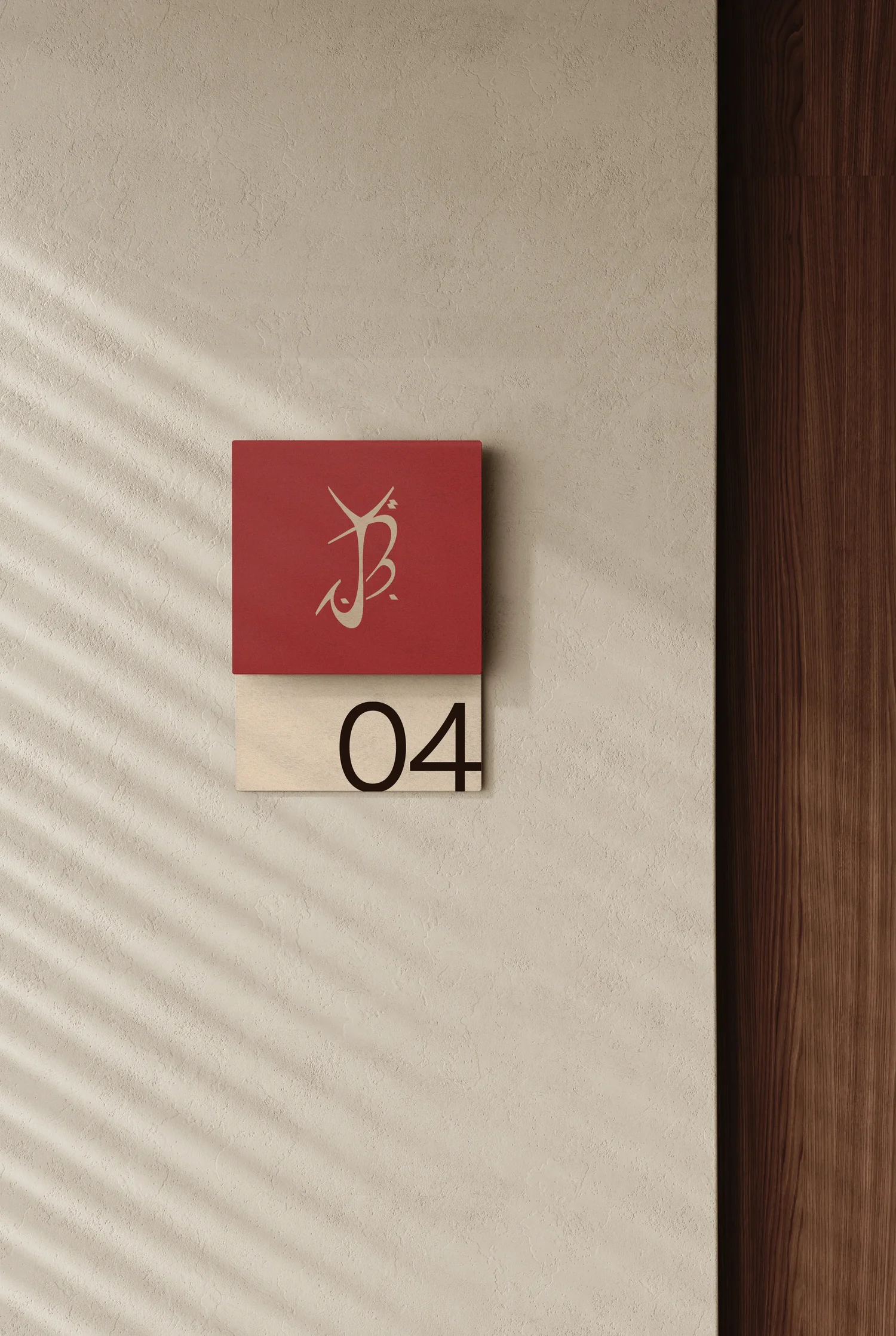

The Desert Signature · 2021
The desert.
The flower.
The identity.